
Recorded at Hope Street Studio, April 2023, and reproduced for the exhibition Night Dwellers, OneSpace Gallery, Brisbane, June 2023.
CARRIE McCARTHY (CM): Let’s start at the very beginning. When did your art practice begin and when did you realise it could become a career?
ZOE PORTER (ZP): My art practice began in the early 2000’s when I was an art student at QCA. I realised that being an artist could become a career when I started my Honours degree in 2005 and during that year, I really focused on making work full-time and exhibiting regularly.
(CM): What or who were your main influences?
(ZP): I think my main drive to make art was just that I had a strong desire to be creative and experiment with different materials and approaches, I loved looking at and making art. My main influences at the time included my peers, my supervisors and lecturers at university, as well as a range of artists. I became aware of the historical work of various artists and groups including the Kalighat painters from India, the Japanese yokai (monster) Bakemono no e scroll, French artist Henri Michaux, the Gutai Group from Japan, The Situationists, Happenings, the Fluxus Group and Maya Deren’s short films from the 1940’s.
Film and literature also influenced my work and allowed me to consider how to present more of a narrative in my work. At the beginning of my Doctorate in 2009 I was researching black and white films such as The Cabinet of Dr. Caligari, Nosferatu, Frankenstein and Un Chien Andalou. Imaginative and surreal books by authors including Haruki Murukami and Georges Batailles, Story of the Eye, also informed the drawings I was making. In terms of contemporary art, I was influenced by Nalini Malani, William Kentridge, Marlene Dumas, Annette Messager, Nick Cave, the local ProppaNoW Collective, Justin Shoulder, Outsider Artists (Judith Scott, Madge Gill, Agnes Richter, Henry Darger), Jumaadi, Heri Dono, Shahzia Sikhander, Tacita Dean, Deborah Kelly and many others.
(CM): Your practice crosses multiple disciplines – is there one aspect that is more dominant, or do you see them as all working together to inform the whole? How did you work across these different disciplines during the residency?
(ZP): My practice is cross-disciplinary and during the residency the works I made shifted between drawing, live performance, costume/soft-sculpture/textiles and photography. Drawing is often at the core of my practice and feeds into the other areas I work in.
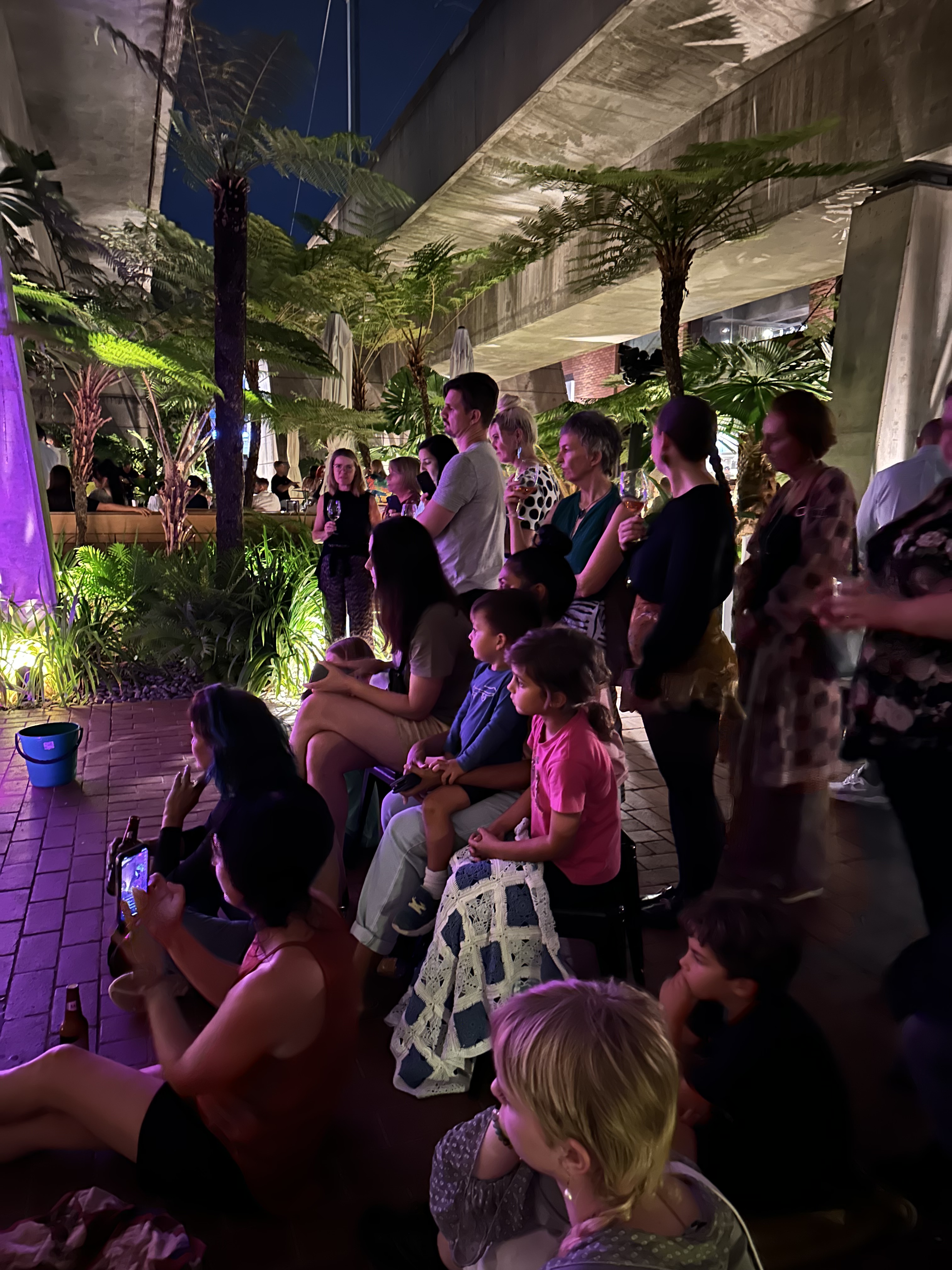
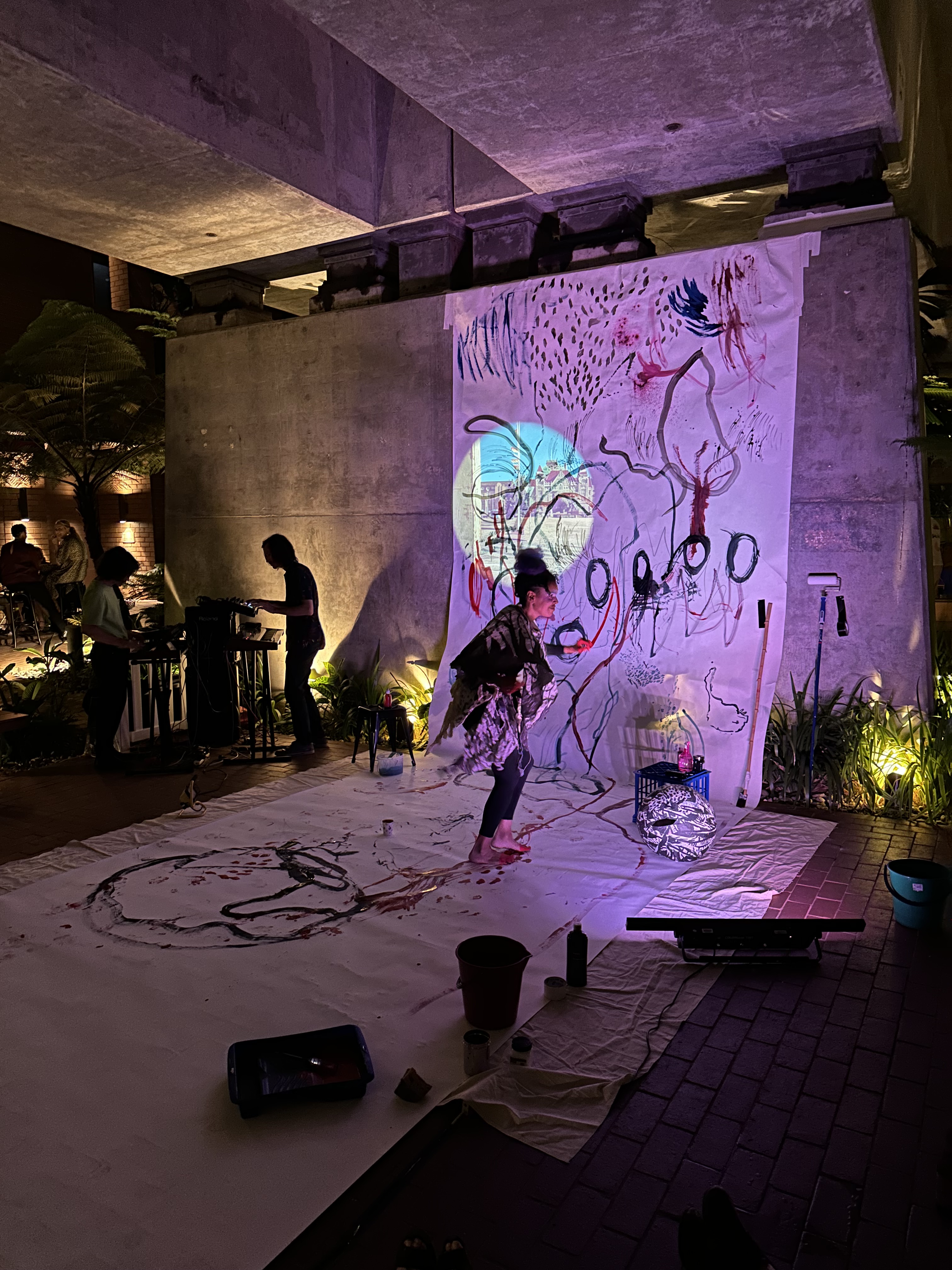
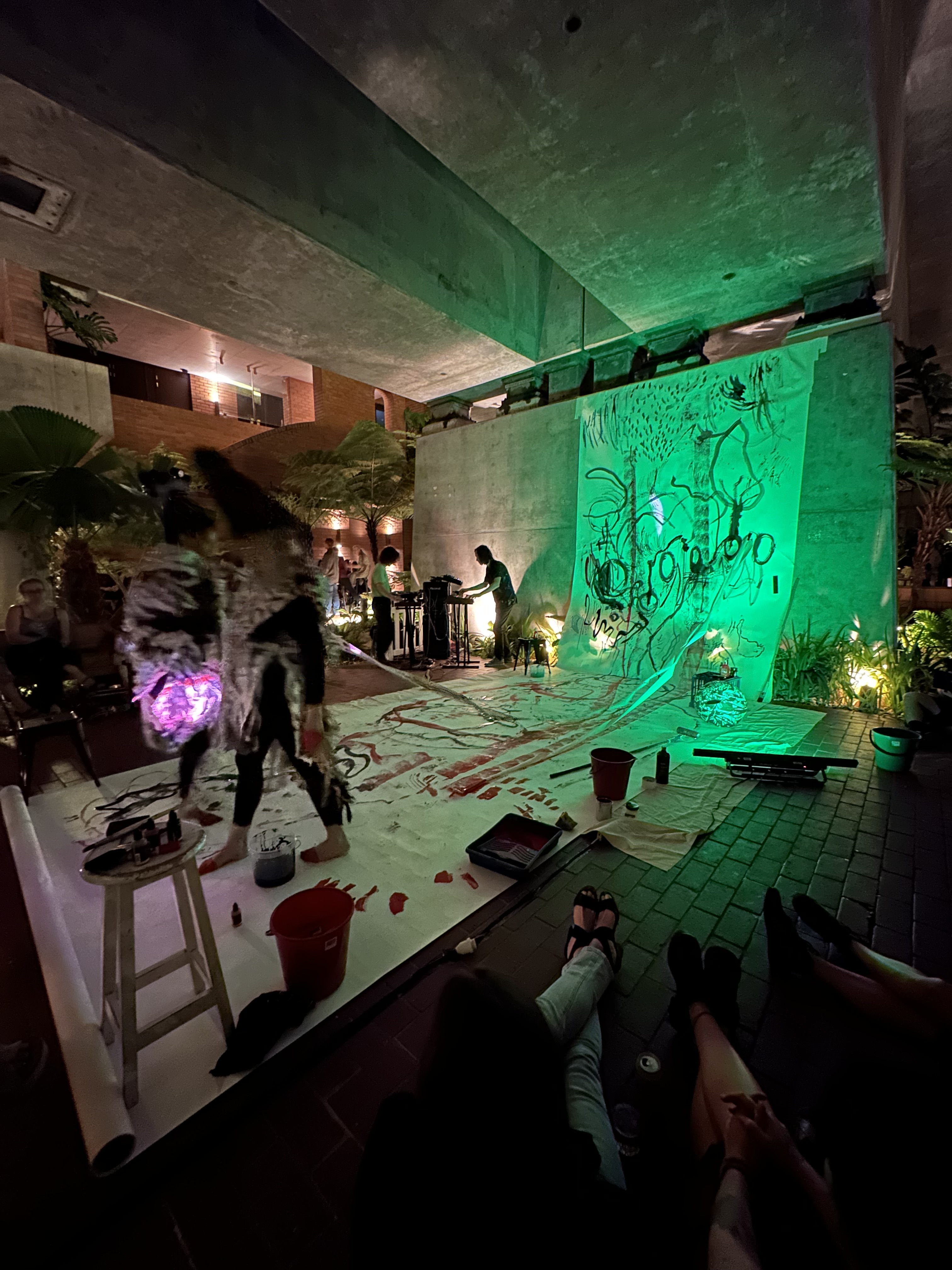
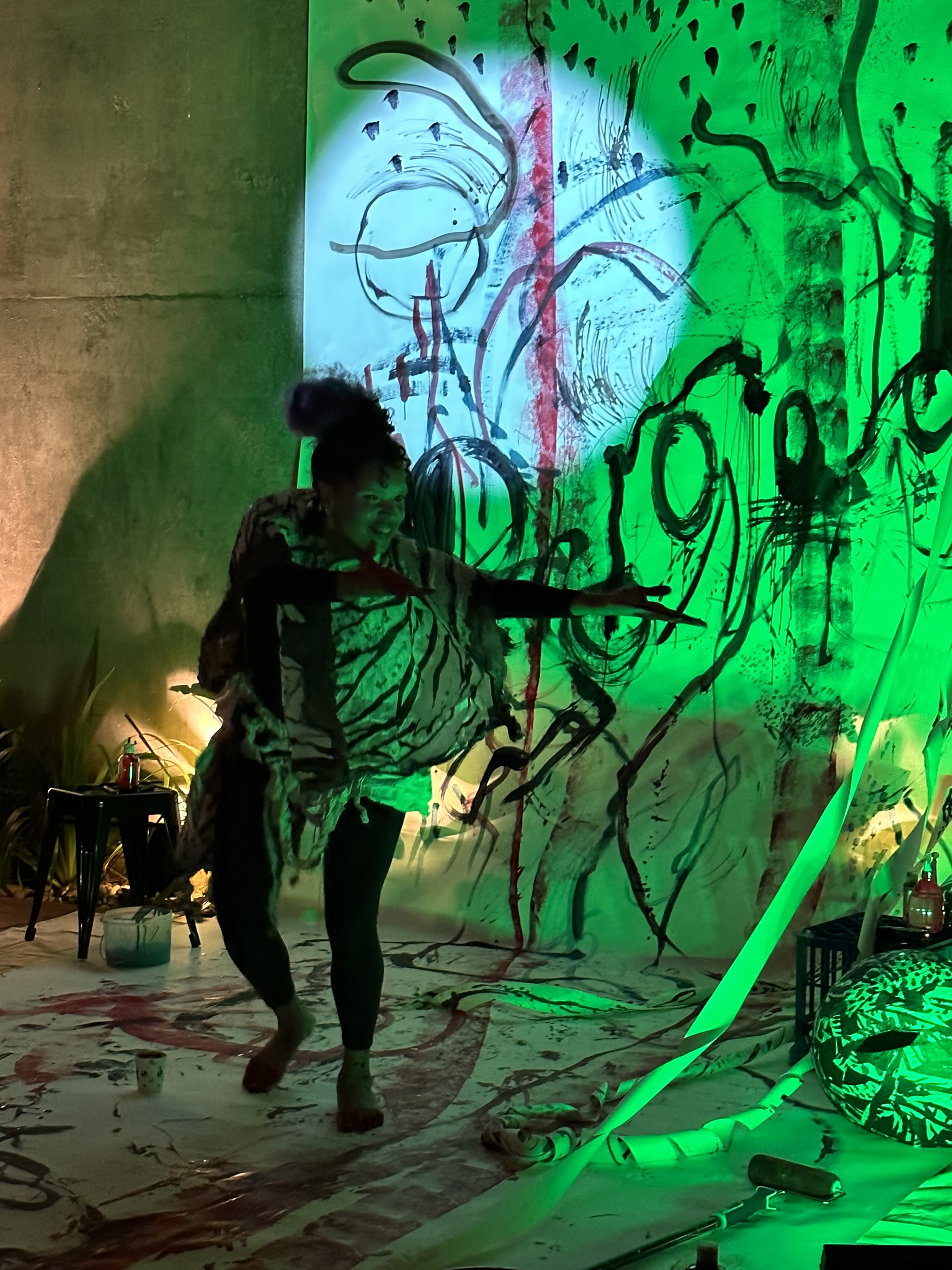
My work usually always starts with drawing and is then transformed into three-dimensional works (soft-sculpture and costume), which then becomes part of live performance-based and installation work. These varied ways of working are all interrelated and cross over to become one whole work. I consider my performances as live, interactive versions of the environments and hybrid forms that are present in my drawings. As part of my residency, I was invited to create a performance-based work where I collaborated with dancer, Frankie Jaiyeola, musicians Michael Medlicott and Tom Hinchcliffe and video artist Jac Bates. The work became a response to the site in Fish Lane and ended up being quite an intimate and intuitive drawing performance.
My performances allow an audience to be immersed in an otherworldly, dream-like space temporarily and they can also participate in the live works and engage with the act or process of drawing. I hope that the performances give an audience a view into the workings of an artist in a studio, something which they wouldn’t normally see or be part of. The documentation of the performances then become the basis for future drawings, so these otherworldly forms and locations continue as new iterations in other artworks.


(CM): You’ve just finished six months as Artist in Residence at Griffith University Art Museum’s Hope Street Studio. What attracted you to this residency?
(ZP): The Hope Street Studio was attractive because I was able to do a residency locally and it was fantastic having a studio right in the heart of the city/South Brisbane. The residency was flexible and allowed me to have space and time for reflection away from my usual home studio. I ended up producing multiple series of works, rather than one large, focused work. The residency culminated in a collaborative live performance at Fish Lane, which was a site-specific work, interweaving drawing, dance, video and live sound.
(CM): You mentioned that the studio residency allowed you to produce multiple series of works – did you find these works differed from your previous body of work? What themes were you exploring?
(ZP): The series of works I produced were all quite separate bodies of works, there was one series depicting coral and nudibranchs that came out of my last body of work, which focused on the Ama divers from Toba, Japan and their relationship to the sea.
The watercolours that I produced during the residency are a direct response to the Hope Street space that combined photographic references from my own photo archive, as well as photographs that I took throughout the residency. I was aiming to combine documentation from early performance-based works with my drawings as a way to construct a new narrative in the watercolours. Similar to previous works, I concentrated on depicting hybrid animal-human and plant-human forms, as a vehicle to present experiences of physical and psychological dislocation. I was also thinking about our interconnectedness with non-human animals and the non-human world in an urban setting and how I could invent my own imaginary/mythological creatures that suggest this connection.
The other small series of works, In the Studio (Series 4), are a continuation of an ongoing body of work that I started creating in 2014, where I was performing in front of the camera in the studio. I consider these images as a kind of extension of my live performance works; incorporating a playful approach to presenting the human body through costume appendages, over painting/drawing and embroidery. These works also aim to blur the boundaries between photography and drawing.
(CM): One of the unique things about this residency is its position on street level in South Brisbane. How different is that to your usual studio environment, and what changes if any did you notice in your practice as a result?
(ZP): The street level position made me feel as if I was witnessing what was happening directly in front of me and it was not so much a private studio space but accessible to the public as well. Local residents and passers-by could watch me working or come into the studio so it was almost like a bit of a performance!
For some of my watercolour drawings I began to photograph what was happening outside of the studio, as well as locals that I’d see regularly. This documentation then became part of my drawings. I think some of the works developed more of an urban feel or quality because of the specific location of the residency.
(CM): What are some of the things that inspired you about the location, and did that change depending on the day?
(ZP): I felt inspired by the busy and urban quality of the studio/location. I became an observer when I was working in the space, as well as being able to retreat and focus intently on creating work. My inspiration did change daily; however, the location became a presence in multiple works including The Bottle man on Hope Street, A View from a Wasteland and Street Theatrics. I also had the opportunity to exhibit in Town Square at Fish Lane and create a live drawing performance work, therefore the site became an important factor in the artworks.
(CM): The Hope St Studio is quite a small space, and you had lots going on in there. What were some of the limitations and how did you get around them? Did you specifically choose to work on certain aspects of your practice, or were you drawn more intuitively to particular things?
(ZP): Yes, I ended up creating multiple different series of works, a lot of works on paper, soft-sculptures and some photography. The limitations to the space were being conscious of not being too messy and there was only a small sink, so I felt like it was difficult making large-scale drawing works. Therefore, the works tended to stay on the small to medium scale. I focused primarily on drawing and textile works as I was able to work quickly on the drawings and re-visit them when I was next in the studio. The works were also influenced by the scale of the vitrine exhibition spaces in Fish Lane where I was able to exhibit a selection of the residency works in February/March 2023.
(CM): You’ve always got a lot going on professionally and artistically, as well as personally. How do you manage that work/artist life balance so that you can take advantage of opportunities like the Hope Street Studio residency?
(ZP): It’s a tricky balance and constant juggle managing an art practice, work and family life but I still try and take on as many opportunities as I can to continue to develop my practice. I have to squeeze in time around part-time teaching and looking after a small toddler and I was mostly getting into the Hope Street Studio on evenings, my days off and weekends. I’ve always worked across drawing and performance, and currently these are both ways of working that aren’t too time intensive and I feel that I can still produce a lot even if I don’t have much time.
About the Hope Street Studio:
The Hope Street Studio is a joint initiative between ARIA Developments and Griffith University Art Museum. Located within the Fish Lane Arts Precinct at 58 Hope Street, Brisbane, the project is designed to activate a street level tenancy as a studio space for alumni of the Queensland College of Art, Griffith University. Invited artists are selected from a shortlist to undertake a residency, during which time they are supported to create a new body of work.
The Hope Street Studio continues Griffith University Art Museum’s long history of supporting artists through residency programs that began in the early 1980s.
 CULTURAL FLANERIE